
ICBF community homes: what they are and how to access them
Last updated: June 2026
When Doña Marleny started working odd jobs cleaning houses, her biggest worry wasn't the pay: it was who to leave her three-year-old son with. She couldn't afford private daycare, and her mother could no longer care for him. A neighbor told her about the house on the corner, where a woman from the neighborhood looked after several children with government support. And so, without realizing it, she came across one of the oldest early childhood programs in the country.
In short: the ICBF community homes These are childcare centers that provide care, meals, and early education for children from vulnerable families, operated with the support of the Colombian Institute of Family Welfare (ICBF). They ensure that young children are protected and well-nourished while their parents work or study. Here's what they are, who can access them, how to apply, and what mistakes to avoid.
What are ICBF community homes?
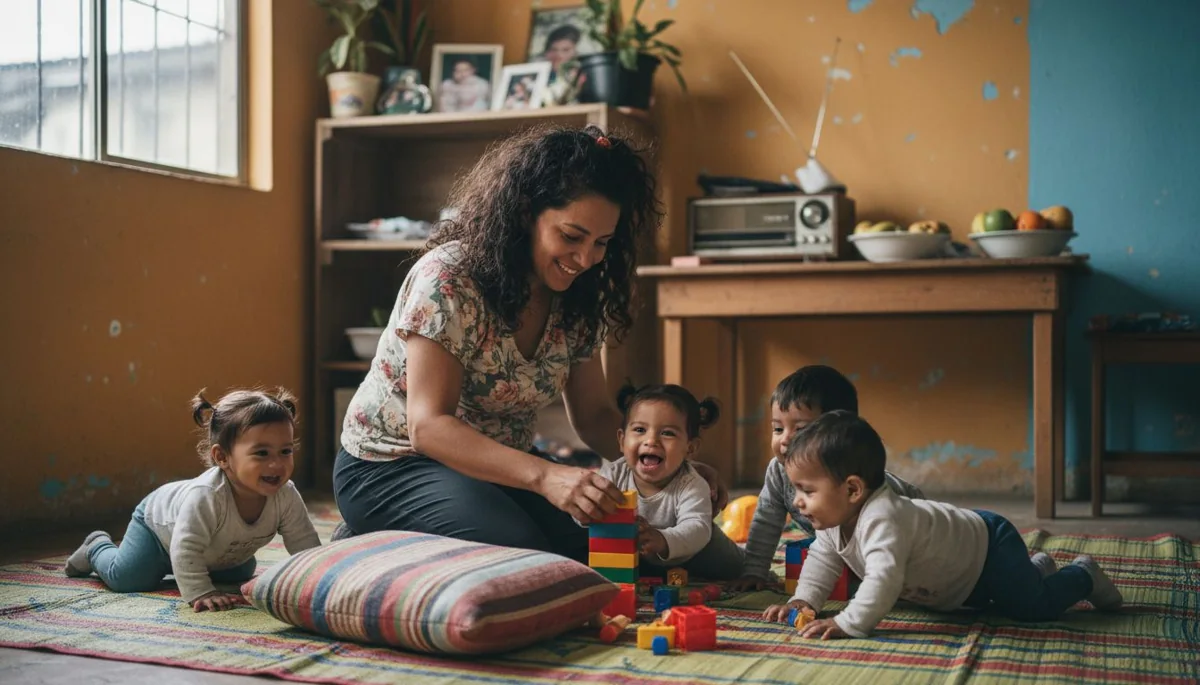
Community Welfare Homes (HCB) were created to bring care and nutrition to early childhood in the neighborhoods where it is most needed. The idea is simple and powerful: a member of the community—the community mother or father—opens their home or a space in the neighborhood to care for a group of young children during the day.
It's not just any daycare. It's part of a comprehensive early childhood care policy and combines three things that vulnerable families often can't afford: a safe place, nutritious food, and early stimulation to better prepare children for school. All under the supervision of the ICBF, which is the entity that defines the guidelines and monitors them.
Who can access a community home?
The program is designed for young children (generally from the first years of life until before starting school) from vulnerable households. Priority is given to families with the lowest incomes, those classified in the lowest Sisbén groups, and populations requiring special protection.
- Early childhood from low-income families.
- Households with a classification of Sisbén in the poorest and most vulnerable groups.
- Families in special situations: displaced persons, victims of the conflict or those with priority due to their circumstances.
- Pregnant women and breastfeeding mothers, served in the modalities designed for them.
If you still don't know which Sisbén group your family belongs to, our guide on [the topic] will be helpful. Sisbén groups for subsidies and the one of How to register in Sisbén, because that classification opens the door to this and other support.
What types of options are available and what does each one offer?
The ICBF (Colombian Institute of Family Welfare) does not serve all children in the same way: there are several programs depending on the age and situation of each family. Knowing these programs helps you find the right support.
Early childhood care modalities
| Mode | Who does it serve? | What it offers |
|---|---|---|
| Community Welfare Home (HCB) | Early childhood children from the neighborhood | Daily care, feeding and early education in the home of the community mother |
| FAMI (Family, Women and Children) | Pregnant women, breastfeeding mothers, and young babies | Family support, check-ups and training in care |
| Child Development Centers (CDI) | Early childhood in areas with infrastructure | Comprehensive care in a specialized center |
| Children's Homes | Early childhood | Institutional care with a professional team |
This is a guide to the early childhood programs offered by the ICBF (Colombian Institute of Family Welfare). The available programs vary by municipality; please confirm which ones operate near your home at icbf.gov.co or at your local ICBF office.
How do I apply for an ICBF community home?
Access is not purchased or "expedited" through intermediaries: it is free and is managed through the ICBF or the authorized operator in your area. The first step is always to visit an official location with the child's and family's documents.
In general, the process is as follows: locate the nearest community home or center, go to the regional office or ICBF service point, present the child's birth certificate, the parents' identification documents, and the Sisbén information, and submit the application according to the available slots. Since coverage depends on the number of slots in each area, it's advisable to inquire early and leave your updated contact information.
Common mistakes when looking for a spot at the ICBF
- Paying a "manager". The program is free; no one should charge you to get a spot.
- Not having your civil registry or Sisbén up to date. Without those documents, the application will be held up; have them ready before you go.
- Waiting until the last minute. Spaces are limited per sector; ask as soon as you know you'll need it.
Why do these programs matter to your family?
Behind every spot in a community home lies much more than just childcare: there's a mother or father who can go to work with peace of mind, a child who eats well during their most important years, and a family that gains a foundation for a better future. Well-cared-for early childhood is one of the most effective ways to break the cycle of poverty.
That's why at Hepacom we see these support programs as part of a single map of rights. Access to community housing, healthcare, and other programs frees up time and resources that a family can direct toward a greater goal: a decent housing in Colombia. If you want to see the full picture, check out our guide to State aid and subsidies in Colombia.
Frequently asked questions about ICBF community homes
Is there a cost to take my child to a group home?
No. Care in community homes and other early childhood programs run by the ICBF is free for families. If someone asks you for money to give you a spot or to "speed up" your enrollment, be suspicious: it's an illegal practice.
From what age and until when can children attend?
These programs are designed for early childhood, from the first months until before starting school. The exact age range depends on the program; check the current range with the ICBF or the operator in your area.
Do I need to be registered in the Sisbén system to access it?
The Sisbén classification is one of the prioritization criteria, because the program serves the most vulnerable families. Keeping your Sisbén up-to-date helps and opens up other support programs; the ICBF (Colombian Institute of Family Welfare) will tell you what documents they require in your case.
What documents do I need to bring to apply for the quota?
They usually ask for the child's birth certificate, the parents' or caregivers' identification documents, and Sisbén information. Since requirements can vary by municipality, confirm the exact list at the ICBF service point before going.
How Hepacom accompanies you
At the Hechos Para la Comunidad Foundation, we work for the right of vulnerable families to a decent life and housing. Many of the families we support also carry the worry of who will care for their children while they seek to earn a living.
We don't allocate slots or process your application—that's done by the ICBF—but we do help you understand the process, avoid intermediaries, and connect these support programs with the path to owning your own home. Find more guides in our blog And if you need guidance, write to us at donaciones@hepacom.org or through the page of contact us.
Information guide. Registration and allocation of slots are handled by the ICBF. Check the requirements and current offerings on their official channels. Hepacom does not charge fees or process paperwork or payments.
Keep reading — more about Education and opportunities
Renewing your ICETEX loan: steps, dates, and what happens if you don't do it
Guide to renewing your ICETEX loan: updating your information, submitting the form to the university, 2026-2 academic calendar, biometrics,…
Read more →Scholarships to study abroad: the real routes for a Colombian family
There are currently four open calls for applications, none of them for undergraduate studies. What does ICETEX offer, how much does it lend in dollars for international studies…
Read more →Álvaro Ulcué Chocué Fund: what it covers, who can apply, and what's next in the 2026-2 call for proposals
The ICETEX forgivable loan 100% for indigenous communities: what it finances, who can apply, the results schedule and…
Read more →Comprehensive early childhood care: what your child is entitled to from 0 to 6 years old
From pregnancy until age six, your child has the right to health check-ups, free vaccines, civil registration, education…
Read more →Your donation builds the next home
If this story touched you, turn it into a roof for a Colombian family.
Donate now ♥