
Generation E: why it no longer accepts new beneficiaries and what replaces it
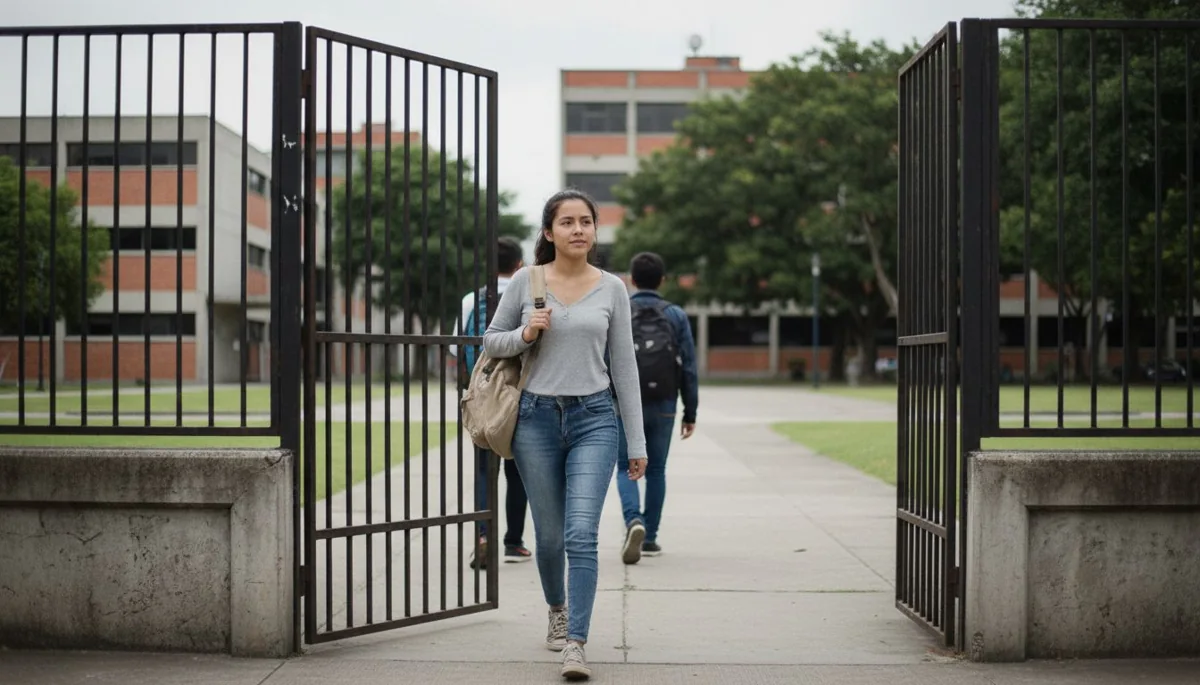
«"Can I still get in?" That's the question we get every time a semester starts, almost always from a mom who saw on Facebook that they're giving away spots to study for free. The short answer is a little discouraging, but it saves money and months of wasted time.
Generation E It no longer accepts new applicants. The Ministry of National Education states this explicitly regarding the Equity component: "no new beneficiaries will be admitted starting in 2023." And the last call for applications for the Excellence component appears on ICETEX with a status of "Closed," with a closing date of August 25, 2022. We verified both on the official websites on August 9, 2026. The good news is that the door to public university is still open, just through a different route.
Can it still be applied to Generation E?
No, there is no open application period. Both components of the program are closed to new beneficiaries: Equity since 2023, by decision of the Ministry of Education, and Excellence since the closing of its fourth application period, which was aimed at those who graduated from high school in 2021 and took the Saber 11 exams that same year.
This matters for a very specific reason: if someone offers to "enroll you in Generation E" in exchange for money, they are scamming you. There's no form to fill out and no spot to reserve. It's the same story we've already seen with government aid programs, which we explained in our guide on [the topic]. How to identify subsidy scams.
What was Generation E and what did each component do?
Generation E was the policy with which the State got involved in paying for higher education for young people from vulnerable families, and it worked on two different tracks that people often confuse.
- Equity. It covered the tuition fees charged by public higher education institutions for undergraduate programs. It was the mainstream lane, the one most people took.
- Excellence. It recognized the academic merit of high school graduates with good results on the Saber 11 exam and awarded a forgivable loan covering the full cost of tuition at a high-quality accredited public or private institution, plus a semesterly stipend for academic and living expenses. The fourth application period required a score of 349 or higher and registration in the Sisbén IV, groups A, B, or C.
If you never quite understood which Sisbén group you fell into, we break that down in our guide to the Sisbén score, because it remains the key to almost everything that comes after.
What replaced Generation E for those starting today?
The Free Tuition Policy. In the Ministry's own words, it is "the way in which the National Government covers the net regular tuition fees for undergraduate students at any of the 64 Public Higher Education Institutions." It is not required, it is not refundable, and it does not depend on a specific application period: it depends on meeting the requirements and being enrolled.
The Ministry publishes five requirements:
- To have Colombian nationality.
- Be between 14 and 28 years old.
- Be registered in the certified national database of Sisbén IV and belong to group A, B or C.
- Be enrolled and registered in the SNIES in an undergraduate academic program.
- Not having a university or postgraduate professional degree.
Politics is based on Law 2155 of 2021 and its regulatory decrees, 1667 of 2021 and 2271 of 2023. The specific procedure is done by the institution where you enroll, not a separate office.
How does Generation E differ from ICETEX?
One was a grant awarded through a competitive application process, while the other is a loan that can be requested each semester. ICETEX lends the money, and that money is repaid unless your loan program includes forgiveness; the other program, on the other hand, selected a closed group and now doesn't accept anyone else.
That's why the routes aren't directly comparable: free tuition applies if you meet the conditions, while credit is a debt you take on. If you're looking at the credit option, the ICETEX requirements for scholarships and loans We have them separate.
What happens to those who are already beneficiaries?
They weren't left hanging. The Ministry clarifies that, even if no new beneficiaries are admitted, this funding source "will remain in effect until the funding for those already approved is exhausted." In the Excellence component, the renewal process is handled by ICETEX on a semester-by-semester basis, updating the data on the platform.
If this applies to you, don't miss your semester renewal date and confirm it directly through the institution's official channel. There are no intermediaries or agents involved.
Which route works for you today?
This is the table that would have saved us several calls. We put it together using the information published today by both entities:
| Route | Can someone new join? | What it covers | Is it refundable? |
|---|---|---|---|
| Generation E (Equity) | No, not since 2023 | Undergraduate enrollment in a public institution | No |
| Generation E (Excellence) | No, the fourth call for applications closed on August 25, 2022. | Full tuition at an accredited institution plus living allowance | Forgivable loan |
| Free Tuition Policy | Yes, if you meet the five requirements | Net regular undergraduate enrollment in the 64 public institutions | No |
| ICETEX educational loan | Yes, it opens applications every semester. | Financing according to the line you request | Yes, except for forgiveness |
Prepared by Hepacom using information published by the Ministry of National Education and by the ICETEX in the information sheet for the fourth call for Generation E (Excellence), consulted on August 9, 2026. The status and dates of each call are defined by the entity.
Common mistakes that cost money or a spot
- Paying for a "registration" to Generation E. There is no open call, so nobody can register you, neither from the inside nor from the outside.
- Believing that free things come on their own. Being in the Sisbén is not enough: you have to be enrolled in an undergraduate program registered in the SNIES of a public institution.
- Confusing credit with scholarship. The ICETEX loan must be repaid, unless it is forgiven. Signing it thinking it's a gift is the mistake we hear about most often years later.
Frequently Asked Questions
Is Generation E over?
To enroll, yes. For those who are already beneficiaries, no: funding continues until it ends, according to the Ministry of Education.
Can I enroll in Generation E in 2026?
There is no open enrollment period. The current policy for starting studies is the Free Tuition Policy.
Does free tuition apply to a private university?
No. The Ministry defines it based on the 64 public higher education institutions.
What if I'm over 28 years old?
Free tuition is available to students between 14 and 28 years old. Outside of that age range, students must consider educational loans or other options, as confirmed by the institution.
Is there anything free while I'm deciding on a university?
Yes, and without any formal announcement: the Free online courses from SENA They can be started at any time and are certified.
How Hepacom accompanies you
At the Hechos Para la Comunidad Foundation, we work for decent housing, and during our neighborhood visits, we learned that the two are inextricably linked: the family that manages to send a child to university is the same one that, three years later, can afford tuition. That's why paying tuition is not a separate issue for us. right to decent housing, It's part of the same path.
If you're unsure which door to go to, write to us at donaciones@hepacom.org or through our website contact. We provide free guidance and help you locate the official channel that corresponds to your case.
Last updated: August 2026.
Information guide. The procedure is handled by the official entity. Verify through the official channel. Hepacom does not charge or process payments.
Keep reading — more about Education and opportunities
Renewing your ICETEX loan: steps, dates, and what happens if you don't do it
Guide to renewing your ICETEX loan: updating your information, submitting the form to the university, 2026-2 academic calendar, biometrics,…
Read more →Scholarships to study abroad: the real routes for a Colombian family
There are currently four open calls for applications, none of them for undergraduate studies. What does ICETEX offer, how much does it lend in dollars for international studies…
Read more →Álvaro Ulcué Chocué Fund: what it covers, who can apply, and what's next in the 2026-2 call for proposals
The ICETEX forgivable loan 100% for indigenous communities: what it finances, who can apply, the results schedule and…
Read more →Comprehensive early childhood care: what your child is entitled to from 0 to 6 years old
From pregnancy until age six, your child has the right to health check-ups, free vaccines, civil registration, education…
Read more →Your donation builds the next home
If this story touched you, turn it into a roof for a Colombian family.
Donate now ♥