
Public utility subsidies by socioeconomic stratum: how they work
Last updated: June 2026
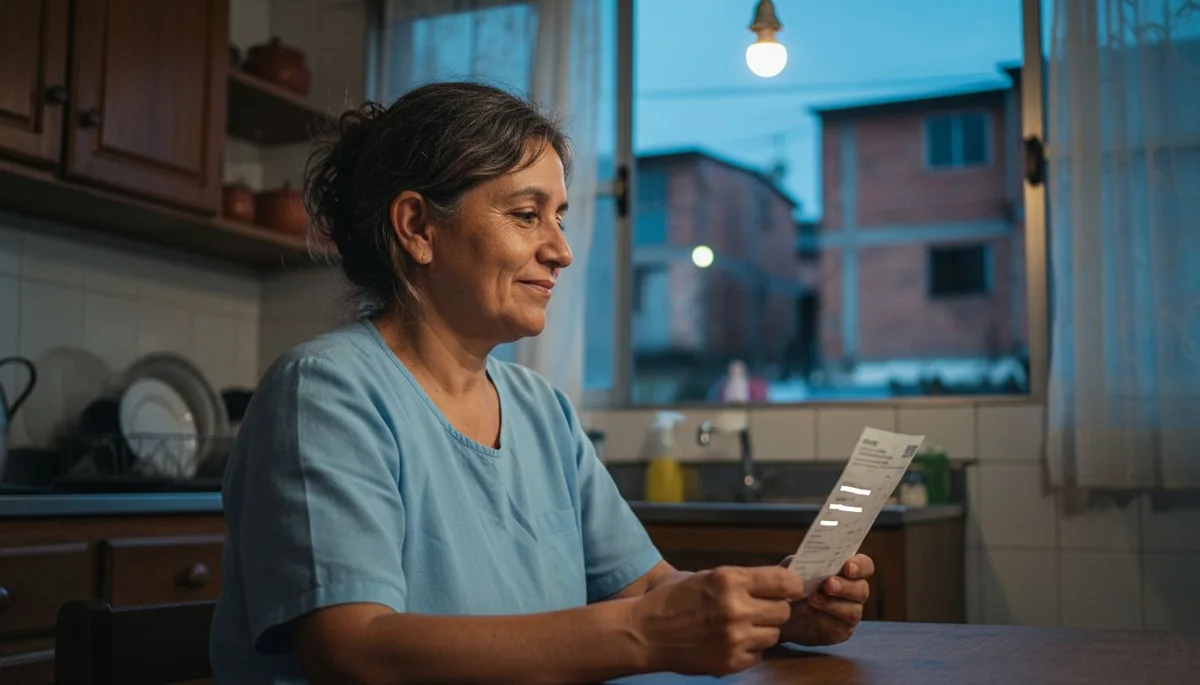
Don Hernando swore he was being overcharged for electricity. When he compared his bill with that of a relative in the same neighborhood, he discovered something different: his was listed as socioeconomic level 3, while his relative's was listed as level 2, which is why the discount wasn't the same. A simple procedure at the mayor's office corrected his socioeconomic level and, consequently, the discount he was entitled to. Many families pay the full rate without knowing they are entitled to a subsidy that is already included on their bill.
In short: the public utility subsidy This is a discount the government applies to water, energy, and gas bills for low-income households, and it's assigned based on your home's socioeconomic stratum, not your Sisbén score. Households in strata 1, 2, and 3 receive a discount on their basic consumption; higher strata, on the other hand, pay a surcharge that helps finance these discounts. Here we explain how it works, how much the discount is, and what to do if something doesn't add up.
What is the public utility subsidy and where does it come from?
The public utility subsidy is a discount that Colombian law mandates be applied to water, sewage, electricity, and gas bills for low-income households. Its legal basis is Law 142 of 1994, which established the framework for residential public utility services in the country.
The logic is based on solidarity: those in socioeconomic levels 5 and 6, along with businesses and industries, pay an additional contribution on their bill, and that money finances the discount for levels 1, 2, and 3. Therefore, it's not a gift or assistance you have to request separately: if your home is in a subsidized socioeconomic level, the discount should already be reflected on your bill.
Who is entitled to the subsidy according to their socioeconomic stratum?
Here's the key point that confuses many: this subsidy is assigned based on the housing stratum, which is different from the Sisbén score or group. One measures your house and its surroundings; the other measures your household's eligibility for other forms of assistance.
- Strata 1, 2 and 3. These are the ones who receive a subsidy on the fare, with a higher percentage for stratum 1 and a lower percentage for stratum 3.
- Stratum 4. It does not receive a subsidy or pay a contribution; it pays the cost of the service.
- Strata 5 and 6. They do not receive a subsidy and pay a contribution that helps to fund that of others.
Your home's socioeconomic stratum is determined by your municipality's mayor's office using the DANE methodology, and it appears printed on each utility bill. If you want to find this support within the broader map of benefits, see our guide to State aid and subsidies in Colombia.
How much is discounted with the public services subsidy?
The discount doesn't apply to everything you consume, but only to what the regulations call subsistence or basic consumption: the minimum amount a family needs to live. Anything you spend above that limit is charged at the full rate.
The law sets maximum subsidy limits on this basic consumption: up to 601 TP3T for stratum 1, up to 401 TP3T for stratum 2, and up to 151 TP3T for stratum 3. We say "up to" because the actual percentage is defined each year by the municipality and regulatory commissions according to the available budget, so it may be equal to or less than these maximums. Therefore, it's important to be mindful of your consumption: using water and energy sparingly keeps your spending within the subsidized range. Natural gas delivered through the pipeline is governed by a separate regulation and has its own limits and subsistence consumption threshold: we explain this in the guide. gas subsidy.
How do I know if I'm receiving the subsidy?
The invoice is your best source. Check these points and you'll quickly know if the discount is being applied.
- Look at the stratum. It's printed on the receipt. Please confirm that it matches the one for your actual address.
- Look for the subsidy line. The invoices itemize the value of the service and the discount applied for subsidy.
- Compare with consumption. If you spend more than the basic consumption, part of your bill is not subsidized, and that's normal.
In some municipalities, such as Bogotá and Medellín, there is also a minimum vital water supply that provides the first cubic meters free of charge to households in socioeconomic levels 1 and 2. If you live in one of those cities, ask your utility company if this applies to you.
What do I do if my socioeconomic status is incorrect or the discount is not applied?
If you believe your property has been assigned to a higher socioeconomic stratum than it should be, you have the right to request a review of the stratification from your municipality's mayor's office. This process is free, and if your claim is upheld, the correction will be reflected in your subsequent bills.
When the problem is with the service provider (they don't apply the subsidy you're entitled to, or there's a charge you don't understand), you can file a formal complaint with the company and, if they don't respond well, go to the Superintendency of Public Utilities, which is the entity that oversees companies. Always keep a copy of your invoices and filings.
Comparative table of public utility subsidies by socioeconomic stratum
This summary compiles in one place what the law establishes for each socioeconomic stratum. These are maximum limits on basic consumption: the actual percentage is set each year by your municipality, so it may be the same or lower.
| Stratum | Do you receive a subsidy? | Maximum subsidy limit (reference) | Contribution made |
|---|---|---|---|
| Stratum 1 | Yeah | Up to 60% of basic consumption | He does not pay tax. |
| Stratum 2 | Yeah | Up to 40% of basic consumption | He does not pay tax. |
| Stratum 3 | Yeah | Up to 15% of basic consumption | He does not pay tax. |
| Stratum 4 | No | Not applicable | Pay the service fee |
| Strata 5 and 6 | No | Not applicable | Pay a contribution that funds the subsidies |
Maximum limits according to Law 142 of 1994. The percentage applied varies each year by municipality. Check the current value on your bill and with your service provider.
Common mistakes when completing this procedure
- Taking the stratum for granted. If the bill shows a higher socioeconomic stratum than it corresponds to, you lose part of the discount; request a free review at the mayor's office.
- Confusing socioeconomic stratum with Sisbén. The subsidy is assigned based on the housing stratum, not the Sisbén group; they are different things.
- Ignoring basic consumption. The discount only covers subsistence consumption; anything you spend above that is charged at the full rate.
Frequently asked questions about utility subsidies
Does the public utility subsidy depend on the Sisbén?
No. This subsidy is assigned based on the housing stratum, which is defined by the mayor's office. The Sisbén system is used for other forms of assistance. You can be registered in a Sisbén group and, separately, receive the discount based on your stratum.
Do I have to apply for the subsidy at an office?
No. If your home is in socioeconomic stratum 1, 2, or 3, the discount is automatically applied to your bill. The only thing you need to check is that the registered stratum is correct.
Why does my bill sometimes not include a discount?
Because the subsidy only covers basic consumption. If you spend more than that limit in a month, you'll be charged the full amount. Reducing your consumption helps you maintain the benefit.
Do tenants also receive the subsidy?
Yes. The subsidy is tied to the property and its socioeconomic stratum, not the owner. If you rent a house in a subsidized stratum, the discount will be reflected on your property bill. If you pay rent separately, also check the rental subsidy.
How Hepacom accompanies you
At the Hechos Para la Comunidad Foundation, we know that every penny counts in a low-income household, and that an incorrectly charged bill can be a burden. The utility subsidy is a right already included on your bill; the challenge is often understanding it and claiming it when something goes wrong.
We help you read your bill, find out what discount you're entitled to, and file a claim when the socioeconomic level is incorrect—all as part of our work for a decent housing in Colombia. Find more guides on rights and support in our blog And if you need guidance, write to us at donaciones@hepacom.org.
Information guide. The official entity handles the process. Verify the percentages, requirements, and conditions in effect in your municipality and with your service provider before making any decisions. Hepacom does not charge fees or manage procedures.
Keep reading — more about State subsidies and aid
Ayudas y subsidios del Estado en Colombia: la guía para tu familia
Mapa claro de las ayudas y subsidios del Estado en Colombia: Sisbén, Renta Ciudadana, IVA, Colombia Mayor, vivienda y cómo evit…
Read more →BEPS de Colpensiones: qué es, quién puede ahorrar y cómo se vuelve un ingreso para la vejez
Guía de BEPS de Colpensiones: qué es, quién puede ahorrar, cómo vincularse, el incentivo del Estado y la diferencia con la pens…
Read more →Jóvenes en Acción ahora es Renta Joven: requisitos 2026
Jóvenes en Acción Renta Joven: requisitos verificados, cómo postularse y por qué hoy no hay inscripciones. Cuidate de los sitio…
Read more →Subsidio del adulto mayor: qué programas hay, cómo consultar y cuándo pagan
Guía del subsidio del adulto mayor en Colombia: qué programas existen (Colombia Mayor, alcaldías, Centros Vida, BEPS), cómo con…
Read more →Your donation builds the next home
If this story touched you, turn it into a roof for a Colombian family.
Donate now ♥