
Reparations for victims: what they include and how to apply
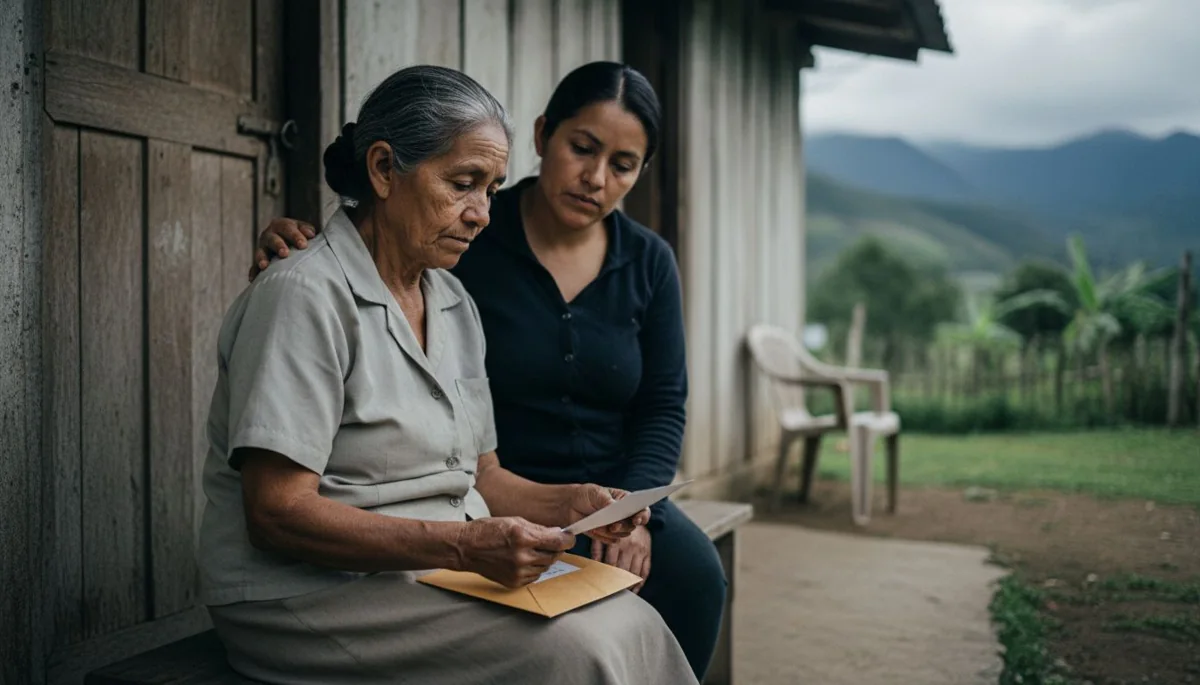
Doña Rosalba received the letter twelve years after her husband was killed. Twelve years of going to the ombudsman's office, of requesting copies, of being told "wait your turn." That wait is the part no one tells families about when they register, and it's precisely what needs to be understood before starting. reparations to victims The solution to the armed conflict in Colombia is not a single payment that can be requested at a window: there are five different measures, and money is just one of them.
Here we explain what each measure includes, how much the State recognizes for each event, how to request it and why it may take time, with the regulation and the entity that says it so that you can verify it yourself.
What is reparation for victims and what does it actually include?
It is the set of measures by which the State responds for the harm suffered by a person as a result of the internal armed conflict. According to Article 25 of Law 1448 of 2011, it includes five measuresRestitution, compensation, rehabilitation, satisfaction, and guarantees of non-repetition. The Victims Unit states this with a warning that should be read carefully: «"Not all victims have access to all reparations measures."».
According to the entity, that depends on the type of incident, the damage suffered, and the victim's wishes.
| Extent | what are you looking for | Rule |
|---|---|---|
| Restitution | To restore the situation prior to the event, including the dispossessed or abandoned land | Articles 71 and 72 |
| Compensation | Financial compensation for the incident suffered, calculated in minimum wages | Art. 132 |
| Rehabilitation | Legal, medical, psychological and social support to restore the person's conditions | Art. 135 |
| Satisfaction | To restore the dignity of the victim and to spread the truth about what happened | Art. 139 |
| Guarantees of non-repetition | Prevention and protection plans to ensure the incident does not happen again | Art. 149 |
Source: Law 1448 of 2011, text in force after Law 2421 of 2024 (August 2026).
A fact that almost no one knows: Law 1448 was modified by the Law 2421 of August 22, 2024, And that reform changed the very definition of victim. Today, Article 3 expressly includes people who are abroad., «"regardless of their immigration status in the country where they live"», and covers the events that occurred from the January 1, 1985. The law remains in effect until June 10, 2031.
How much does the administrative compensation pay for each incident?
The amounts are set in current monthly legal minimum wages, not in pesos, and therefore change every year. The Unit publishes them by victimization event.
| victimizing act | Amount recognized | Estimated in 2026 pesos |
|---|---|---|
| Homicide | 40 SMLMV, are divided among family members | $70.036.200 |
| Enforced disappearance | 40 SMLMV, are divided among family members | $70.036.200 |
| Kidnapping | 40 SMLMV, directly to the person who was released | $70.036.200 |
| Injuries resulting in permanent disability or incapacity | Up to 40 SMLMV | Up to $70.036.200 |
| Injuries that resulted in disability | Up to 30 SMLMV | Up to $52.527.150 |
| Illicit recruitment of minors | 30 SMLMV | $52.527.150 |
| Crimes against sexual freedom and integrity | 30 SMLMV | $52.527.150 |
| Torture or cruel treatment | 10 SMLMV | $17.509.050 |
| Forced displacement | 27 or 17 SMLMV per family unit, in equal parts | $47.274.435 or $29.765.385 |
Amounts published by the Victims Unit, consulted in August 2026. The column in pesos is a our estimated calculation with the minimum wage of 2026 ($1,750,905, Decree 0159 of 2026, transitory), not an official figure: the exact value is defined by the Unit in each case.
There are three rules that get lost in the summaries and that change the calculation. If a person suffered more than one incident, the compensation is cumulative. up to a limit of 40 SMLMV. In cases of torture, if the act also resulted in injuries, compensation is awarded for the physical or psychological harm, but the sum does not exceed 40 times the minimum monthly wage. And in cases of homicide and forced disappearance, the amount is not per family member: it is divided among them according to the victim's marital status at the time of the event.
The backing for each figure: the amounts for injuries come from Resolution 0848 of 2014, the amount for torture from Resolution 00552 of 2015, the limit of 40 SMLMV from article 2.2.7.3.4 of Decree 1084 of 2015, and the difference between 27 and 17 SMLMV in forced displacement, from Sentence SU-254 of 2013.
How to request reparations for victims step by step?
The starting point is not requesting compensation: it's being on the registry. Without inclusion in the Single Registry of Victims There is no route that is moving forward, and we explain that process separately with its deadlines.
With the inclusion confirmed, the route is this:
- Declare and be included in the RUV. The statement is made before the Public Ministry: municipal ombudsman, Ombudsman or Attorney General's Office.
- Request advice on the right to compensation. The Unit describes it as personalized attention provided by officials called integral links, in regional centers and in workshops in remote municipalities.
- File the claim for compensation. Through the Unit's channels: service points, regional centers, or consulates from abroad.
- Wait for the final answer. The Unit decides whether the person is entitled to the measure.
- Enter the prioritization method. With an affirmative response, the case enters the technical queue that defines the payment order.
All these services are free, And the entity itself warns on its website that intermediaries should be avoided.
Why can compensation take years to arrive?
Because having a recognized right and having a payment schedule are two different things. There is a technical prioritization method The Unit applies this system each year, in the first half of the year, only to those who have already received a positive substantive response. It cross-references demographic and socioeconomic variables, the victimization event, and progress along the process, and produces a score. Appointments are then given to those with the highest scores, according to the budget for that year.
Those who are not prioritized do not lose their right: they wait to have the method applied to them the following year, and so on. The Unit states this clearly in its own text: «"This could take several years"».
That phrase, written by the paying entity, is the best defense against anyone offering to "speed up your place in line." You can't speed up your place in line by paying.
Common mistakes when seeking compensation from victims
- Believing that inclusion in the RUV is payment. These are separate stages: first the inclusion, then the application, then the substantive response, and finally the turn.
- Paying a fixer who promises to move you ahead in line. The prioritization method is technical and budgetary. No one from outside influences it, and official advice is free.
- To give up on the case because years have passed without a response. The right does not expire with the waiting period, and the process is repeated annually. It is advisable, however, to keep your contact information updated with the Unit.
Money fixes part of the problem, a roof changes your life.
At the foundation, we see the same story repeated: the compensation arrives, it's enough to cover old debts, and then it's gone, and the family continues renting the same room. Acknowledging the harm done doesn't solve where that family will sleep for the next twenty years.
That's why it's worth looking in parallel at the housing options that a victim family can apply for, such as the free government housing subsidy, he solidarity rental subsidy while something stable is being achieved, or the housing aid for disaster victims if there was also an emergency. In our guide on State aid and subsidies in Colombia The others are gathered, and in the one of decent housing in Colombia We explain why the roof is the foundation of everything else.
And the usual warning: where there's public money, there are opportunists. If someone offers to handle your repair for a percentage, read up on how the system works. subsidy scams.
Frequently asked questions about reparations for victims
Who can request reparations for victims?
People who suffered harm from events occurring from January 1, 1985 onwards due to the internal armed conflict, according to current Article 3 of Law 1448. This includes those who are outside the country, regardless of their immigration status.
How long does it take to receive compensation?
There is no fixed timeframe. It depends on the score generated by the prioritization method and the Unit's annual budget. The entity itself warns that it could take several years.
Does reparations for victims have any cost?
No. Neither the declaration, nor the advice, nor the claim for compensation has any cost. Any charge for processing the claim is illegal.
How Hepacom accompanies you
At the Hechos Para la Comunidad Foundation, we don't handle paperwork with the Victims' Unit, nor do we charge for guidance: we are not intermediaries. Our focus is on providing decent housing and helping you understand which door to knock on so you don't waste months on the wrong one.
If you are a family affected by the conflict and are looking for ways to improve or obtain housing, write to us at donaciones@hepacom.org or go to contact us And we'll guide you free of charge. If you'd like to contribute to another family's dream of owning a home, that same channel is available.
Last updated: August 2026.
Sources: Victims Unit, compensation, comprehensive individual repair and the current text of the Law 1448 of 2011.
Information guide. The procedure is handled by the official entity. Verify through the official channel. Hepacom does not charge or process payments.
Keep reading — more about State subsidies and aid
Ayudas y subsidios del Estado en Colombia: la guía para tu familia
Mapa claro de las ayudas y subsidios del Estado en Colombia: Sisbén, Renta Ciudadana, IVA, Colombia Mayor, vivienda y cómo evit…
Read more →BEPS de Colpensiones: qué es, quién puede ahorrar y cómo se vuelve un ingreso para la vejez
Guía de BEPS de Colpensiones: qué es, quién puede ahorrar, cómo vincularse, el incentivo del Estado y la diferencia con la pens…
Read more →Jóvenes en Acción ahora es Renta Joven: requisitos 2026
Jóvenes en Acción Renta Joven: requisitos verificados, cómo postularse y por qué hoy no hay inscripciones. Cuidate de los sitio…
Read more →Subsidio del adulto mayor: qué programas hay, cómo consultar y cuándo pagan
Guía del subsidio del adulto mayor en Colombia: qué programas existen (Colombia Mayor, alcaldías, Centros Vida, BEPS), cómo con…
Read more →Your donation builds the next home
If this story touched you, turn it into a roof for a Colombian family.
Donate now ♥