
Annual obligations of a non-profit organization: the complete calendar
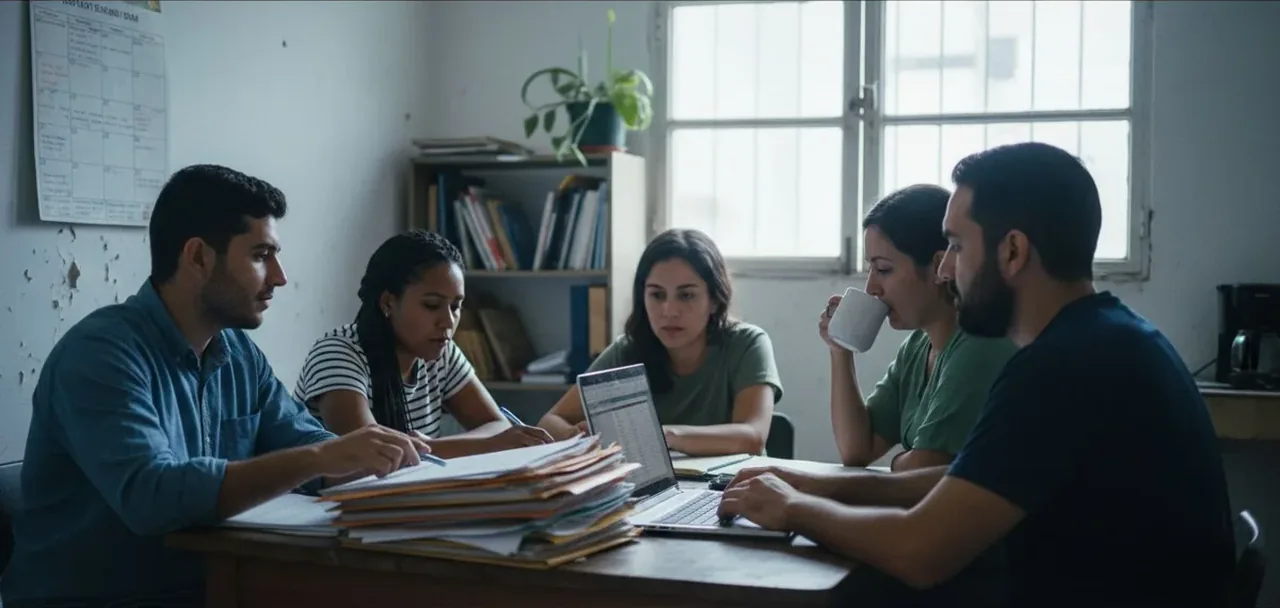
Creating the foundation was the beginning; keeping it up-to-date is what keeps it alive. Every year, a non-profit organization has a list of tasks with the Chamber of Commerce and the DIAN (Colombian Tax Authority) that cannot be missed. Knowing the annual obligations of a non-profit organization This is what separates a foundation that operates smoothly from one that ends up sanctioned or, worse, removed from its special tax regime and forced to pay taxes it could have avoided. Here's the complete schedule, showing who to contact for each matter and in which month, so you won't be caught off guard.
At Hepacom, we are a foundation (a non-profit organization) that works to provide decent housing for families in Itagüí, so we manage this calendar ourselves every year. This guide is for informational purposes; the procedures are handled by the Chamber of Commerce and the DIAN (National Tax and Customs Directorate).
What are the annual obligations of a non-profit organization?
A foundation has obligations on two fronts: registration with the Chamber of Commerce and tax compliance with the DIAN (Colombian Tax Authority). In addition, it has internal governance responsibilities, such as convening the general assembly. These tasks are few, but they have fixed deadlines, and several are interdependent.
The golden rule is that being exempt from paying income tax doesn't mean being exempt from compliance. Non-profit entities under the Special Tax Regime file tax returns, report, and update their information just like any other entity; the benefit applies to the tax itself, not to the obligations. If you're just starting out, first look at... How to create a foundation in Colombia y What is a non-profit organization?.
The calendar of obligations, month by month
This is the map we use to make sure we don't miss any dates. Use these dates as a reference and confirm the DIAN tax calendar and your Chamber's rules each year, as they may change.
| Obligation | Before whom | Reference period |
|---|---|---|
| Ordinary meeting of associates or founders | Internal organ | First 3 months of the year (according to statutes) |
| Registration renewal | Chamber of Commerce | Until March 31 |
| Update to the Special Tax Regime (RTE) | DIAN | Until June 30th |
| Income tax return and supplementary documents | DIAN | According to the tax calendar (by NIT) |
| Exogenous information | DIAN | According to the DIAN's annual calendar |
| Financial statement (if it exceeds the income limit) | DIAN | Along with the RTE update |
Common mistakes that take a foundation out of the special regime
- Do not renew in the Chamber before March 31: The entity becomes outdated and can accumulate penalties that are difficult to clear later.
- Forgetting the RTE update of June 30: If you don't do it on time, the DIAN can remove you from the special regime and you will start paying income tax like an ordinary entity.
- Believing that "not paying" is "not declaring": Exempt non-profit entities are still required to file an income tax return. Failure to do so will result in penalties for non-compliance.
What's happening with the renewal at the Chamber of Commerce?
Every registered non-profit organization (ESAL) renews its registration annually, just like a company. The deadline is March 31st, and this renewal provides the certificate of existence and legal representation that will be required by banks, for grant applications, and for partnerships. This document proves the foundation's existence and identifies its representatives.
If you've never renewed it or you're behind, check out how to get up to date at Renew the ESAL registration at the Chamber of Commerce. Having a valid certificate is a requirement for almost everything else.
And what about obligations to the DIAN (Colombian Tax Authority)?
Here's the crux of the matter. To maintain the benefit of not paying income tax in 20%, the foundation must belong to the Special Tax Regime and update its status annually before June 30th, publishing its information on the DIAN application. This is in addition to filing the annual income tax return and providing external information when applicable.
If your organization exceeds a certain income threshold in a year, it must also submit a financial report. We understand that this sounds like a lot, but it's what gives the foundation transparency to donors and the government. Let's delve deeper into... What is the Special Tax Regime? and in How to update the RTE before June 30th.
Who is responsible for ensuring that all of this is fulfilled?
The responsibility lies with the legal representative and the governing body of the foundation. Therefore, from the articles of incorporation It's important to clearly define the roles and who is signing. Many small foundations rely on an accountant for their tax obligations, which is highly recommended.
If you are still defining the structure of your entity, take a look at the difference between foundation, corporation and association, because some obligations change slightly depending on the type. The official rules are published by the DIAN y Confecámaras.
How Hepacom accompanies you
Behind every foundation that operates daily is a community that wants to organize itself to defend a right, and in our case, that right is decent housing. We know how easy it is for a small foundation to miss a deadline, so we share what we learned managing our own. We don't handle the paperwork for you (that's done by the Chamber of Commerce and the DIAN), but we do provide guidance so your foundation stays strong and can continue serving its needs. Write to us at donaciones@hepacom.org or from contact us.
Frequently Asked Questions
What are the annual obligations of a non-profit organization in summary?
Hold the assembly, renew the registration with the Chamber of Commerce (until March 31), update the Special Tax Regime before the DIAN (until June 30) and submit the income tax return and exogenous information according to the DIAN schedule.
Does a tax-exempt foundation have to file an income tax return?
Yes. Being in the Special Tax Regime exempts you from paying the tax under the conditions of the law, but not from filing an income tax return each year. Failure to file will result in penalties.
What happens if I don't update the RTE before June 30th?
The Colombian Tax Authority (DIAN) can exclude a foundation from the special tax regime. In that case, it becomes taxed as an ordinary entity, which usually means paying income tax. That's why this is the most critical time of year.
Do I need an accountant to fulfill these obligations?
It's not mandatory in all cases, but it's highly recommended for fulfilling your obligations to the Colombian Tax Authority (DIAN). An accountant helps ensure that your tax returns and external reports are filed correctly and on time.
Last updated: July 2026. Information guide. The procedures are handled by official entities (Chamber of Commerce and DIAN). Verify the exact dates through the official channels each year. Hepacom does not charge fees or process payments.
Keep reading — more about Foundations and Non-Profit Organizations
Accounting for a foundation in Colombia: what obligations do you have?
What accounting procedures must a foundation follow in Colombia? IFRS standards, books and supporting documentation, external reporting to the DIAN (Colombian Tax Authority) and its related procedures…
Read more →Is a statutory auditor mandatory for a non-profit organization? The rule and the limit that doesn't apply to you.
Is an auditor mandatory for a non-profit organization? The limits established by Law 43 of 1990 apply to commercial companies. What are the actual requirements?
Read more →Do foundations pay taxes? The myth of VAT and income tax in non-profit organizations
Do foundations pay taxes in Colombia? The myth debunked: income tax for 20%, reinvestment exemption (art. 358) and VAT on…
Read more →Statutes of a foundation: model and essential clauses
Foundation bylaws: which template to use and which clauses are essential for registering your non-profit organization with the Chamber of Commerce and other entities…
Read more →Your donation builds the next home
If this story touched you, turn it into a roof for a Colombian family.
Donate now ♥