
Food bank: how it works and how to request or donate
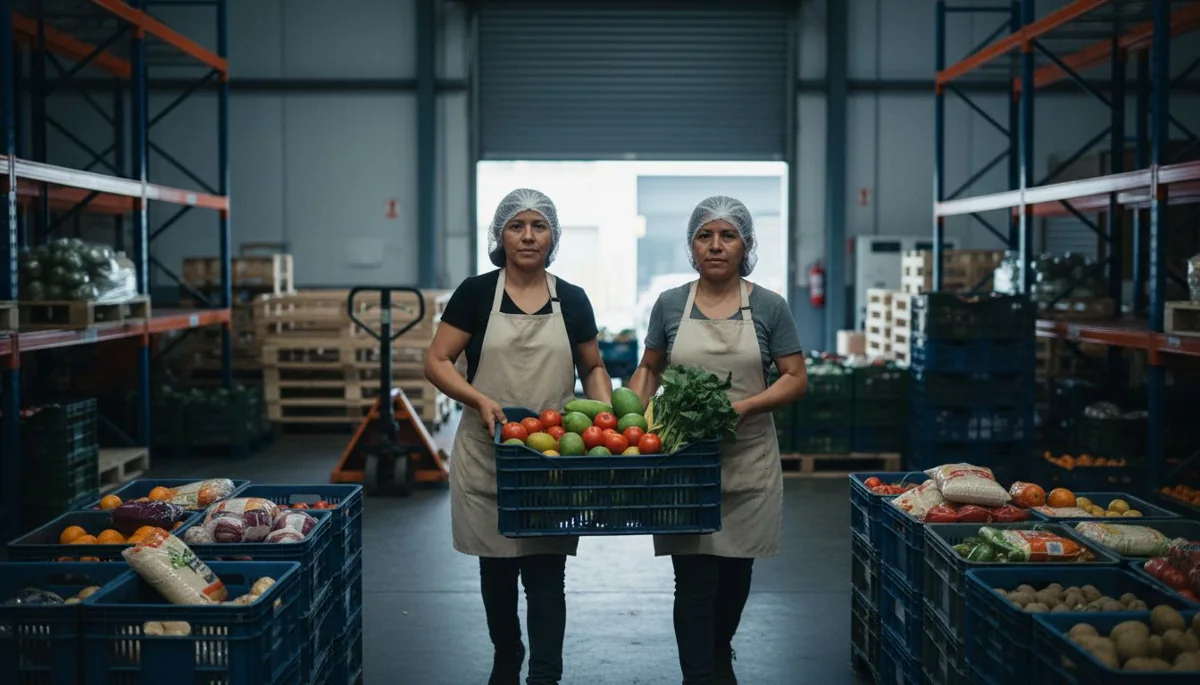
In this country, healthy food is thrown away every day, sometimes entire boxes at a time, while just a few blocks away, a mother is stretching the rice to last until Friday. food bank It's the organization that stands between those two scenarios: it collects surplus food from agriculture, industry, and commerce, inspects and sorts it, and distributes it to families in need. It doesn't give away money and almost never delivers food directly to people's homes: it works with soup kitchens, shelters, and foundations that have already identified the people in the neighborhood.
Here's how it works internally, who can receive this help, how to request it in your city, and how to donate.
What is a food bank and how does it work internally?
A food bank rescues food fit for human consumption that was destined for the trash and redistributes it. According to ABACO, the Association of Food Banks of Colombia, These surpluses come from the agricultural sector, industry, commerce, hotels and restaurants, and also from individuals who donate.
The chain has four steps and it's worth understanding it because it explains almost all the doubts that arise later:
- Rescue. A market, a supermarket, or a producer notifies the bank that they have overripe fruit, damaged packaging, or a harvest they can't sell. The bank collects it.
- Selection. Items that are not in suitable condition are discarded, and the rest is sorted. This is where the nutrition team comes in: ABACO reports that 45% of its donations are fruits and vegetables, and 21% are dairy products, meat, and grains.
- Armed. The food packages are put together using the rescued items and the money donated to buy them.
- Delivery. The bank doesn't distribute aid door-to-door. It delivers it to beneficiary organizations, and those organizations distribute it to the population they have already registered and identified.
That last step is the one that generates the most misunderstandings, and it's the one that saves you a wasted trip.
Who can receive food from a food bank?
The short answer: families access the program through an organization, not directly through a bank window. If there's a community kitchen, a parish, a senior citizens' home, or a foundation in your neighborhood that already receives loans from the bank, that's your best option. If none of these exist, the best way forward is for an organization in your area to register as a beneficiary.
This isn't just unnecessary bureaucracy. Banks handle perishable goods and need to know how many people are receiving them and under what storage conditions. A broken cold chain turns aid into a health hazard.
If you have an emergency today and no one else to turn to, start with the ombudsman's office or the social welfare department of your municipality, as they have a map of active soup kitchens. And also check the State aid and subsidies in Colombia, because several provide money for food and operate in parallel.
How to ask for help from a food bank in your city?
The first step is to locate the bank that covers your region. ABACO states 26 food banks in the country and publishes a list of its partner organizations by city. As of August 20, 2026, this public list includes 22 organizations in 21 cities and regions:
| City or region | Food bank associated with ABACO |
|---|---|
| Bogotá | Archdiocese of Bogotá Food Bank Foundation |
| Medellín | Saciar Foundation and Medellín Archdiocese Food Bank Foundation |
| Cali | Archdiocese of Cali Food Bank Foundation |
| Barranquilla | Social Ministry of Barranquilla |
| Cartagena | Archdiocesan Food Bank of Cartagena |
| Bucaramanga | Food Bank of Bucaramanga |
| Cúcuta | Pastoral Service Corporation Diocese of Cúcuta |
| Pereira | Caritas Foundation Food Bank of Pereira |
| Manizales | Social Pastoral Caritas Archdiocese of Manizales |
| Armenia | Food Bank of Armenia |
| Carthage | Cartago Archdiocese Food Bank Foundation |
| Ibagué | Archdiocesan Food Bank of Ibagué |
| Neiva | Neiva Diocesan Food Bank Foundation |
| Villavicencio | Villavicencio Food Bank Pope Francis |
| Grass | Diocesan Food Bank of Pasto |
| Santa Marta | Social Ministry of Santa Marta |
| Valledupar | Valledupar Food Bank |
| Hunting | Food Bank of Montería |
| Sincelejo | Food Bank of Sincelejo |
| Zipaquirá | Zipaquirá Food Bank |
| La Guajira | Guajira Food Bank |
List of partner organizations published by ABACUS, Accessed August 20, 2026. The same entity reports 26 banks in operation: this discrepancy with the public list is confirmed by ABACO. If your city is not listed, contact the network before assuming there is no coverage.
Common mistakes when looking for a food bank
- Go to the store with your ID to ask for groceries. The distribution is done through beneficiary organizations. It's helpful to ask the bank which ones operate in your area.
- Paying for registration or for a place. No food bank charges to be added to a beneficiary list. If someone charges you, it's a scam: see how to identify them in subsidy scams.
- Search on Google only for the label "food bank" in your city. Several operate under the name of a social ministry or foundation, as seen in the list above.
How to donate food, money, or time?
A person can donate in three ways, and all three are needed. Non-perishable food and fresh produce in good condition go directly to sorting. Money is converted into what's almost never in excess when donated: oil, unrefined cane sugar, grains, and toiletries. And time covers what no budget can buy, because sorting tons of goods is done by hand. If you'd like to lend a hand in any of these ways, we'll explain how to get involved. volunteering in Colombia.
For a company, the logic is different. The surplus currently paid for destruction can be treated as a donation, and that donation is tax-deductible when received by an authorized entity and properly documented. The rules and limits are in corporate donation and tax benefit, The document that supports the operation is the donation certificate, and we reviewed the most recent framework in tax benefits of Law 2380. Donating surplus is also one of the cleanest ways to corporate social responsibilityIt's measured in kilos, not speeches.
What does Colombian law say about food waste?
There is a standard dedicated to this topic. Law 1990 of 2019 It created the policy to prevent food loss and waste, and its third article establishes the order of priority that actions must follow: first reduce, then allocate for human consumption, then utilize organic waste, and lastly, feed for animals. This hierarchy is precisely where a food bank fits in: at the level of human consumption.
The same law places policy under the purview of the Intersectoral Commission for Food and Nutritional Security. For a family, this doesn't change any procedures, but it does explain why a company can return products it no longer sells without it posing a legal problem.
The market eases the month, the roof changes your life
At the Hechos Para la Comunidad Foundation, we see the same scenario often: when rent eats up more than half of the income, food is the first thing to be cut. That's why a food basket that arrives on time isn't charity; it's lifeline, ensuring the family doesn't have to choose between lunch and homelessness. And that's why our work focuses on the other side of the problem: decent housing in Colombia.
After the August earthquake, that burden became even heavier for families who lost both their homes and kitchens on the same day. We gathered the available resources for that purpose in housing assistance for earthquake victims.
How Hepacom accompanies you
We are the Hechos Para la Comunidad Foundation, and we work for decent housing for Colombian families. We don't operate a food bank, we don't distribute food baskets, and we don't charge for guidance. We do, however, help families in our neighborhoods find the right place to live. If you need guidance, or if you are a company that wants to contribute surplus funds or money, please write to us at donaciones@hepacom.org or leave us your details at contact us.
Frequently Asked Questions
Does the food bank deliver groceries directly to an individual?
Generally, no. It is delivered to beneficiary organizations that distribute to a registered and targeted population, so a family's path is through a soup kitchen, a parish, or a foundation in their area.
How much does it cost to register?
Nothing. Neither the registration of a family nor that of a beneficiary organization has any cost. Any charge for a spot is a red flag.
What foods can be donated?
This product is safe for human consumption, even if the packaging is damaged or the product is overripe. Expired, opened, or refrigerated items will not be accepted.
Can a company donate surplus funds and deduct the cost?
Yes, when the recipient is an authorized entity and it is supported by its certificate. The limits are defined by the current tax regulations and confirmed by your accountant with the DIAN.
Can I volunteer without experience?
Yes. Most of the work is sorting, packing, and loading, and you learn it on the same day.
Last updated: August 2026.
Information guide. The process is handled by the official entity. Verify on the official channel. Hepacom does not charge or manage payments. Coverage, requirements, and hours are defined by each food bank and must be confirmed with them.
Keep reading — more about Donations and volunteering
Voluntariados en Bogotá: organizaciones reales, cómo inscribirte y cuál elegir
Guía de voluntariados en Bogotá: qué organizaciones reales reciben voluntarios, cómo inscribirte, qué requisitos piden y qué ti…
Read more →Volunteering in Colombia: types, requirements and how to choose an organization
Volunteering in Colombia: what Law 720 of 2001 says, the types that exist, the real requirements and how to choose an organization…
Read more →Tax benefits of Law 2380 of 2024: donate and deduct taxes
Tax benefits under Law 2380 of 2024: how much your company can deduct when donating to a foundation (25% or 37%) and how to do it…
Read more →How to help at Christmas in Colombia
How to help a family without decent housing in Colombia this Christmas: donate, volunteer, donate goods, or sponsor a family. Sumat…
Read more →Your donation builds the next home
If this story touched you, turn it into a roof for a Colombian family.
Donate now ♥