
Housing borrowing capacity: how much will the bank lend you
Last updated: June 2026
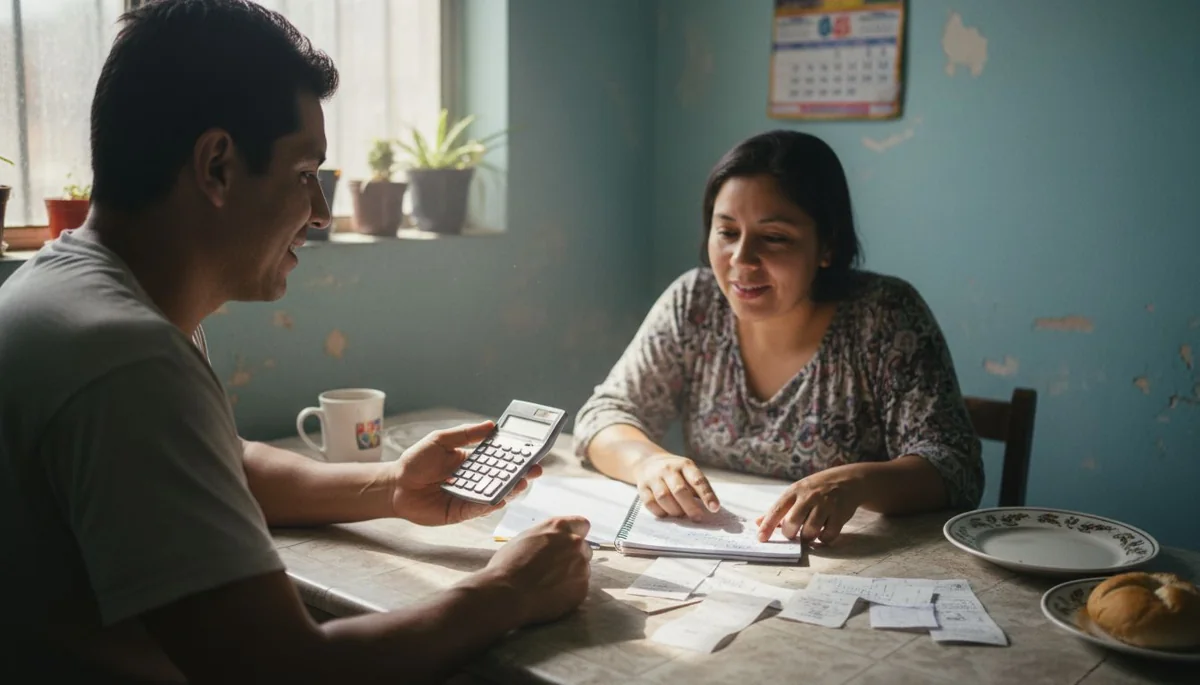
Don Aristóbulo arrived at the foundation with a folder full of apartment quotes and a question that had been keeping him up at night for weeks: "How much will they lend me?" He had already seen the house, he had already done the math on the back of a receipt, but the number he dreamed of and the one a bank would approve were not the same. That difference, which almost no one explains to a working family in time, has a technical name: borrowing capacity for housing.
In short: your mortgage borrowing capacity is the maximum monthly payment you can afford without straining your household budget, and in Colombia, most banks allow payments up to 301% of your monthly income. Knowing your limit before falling in love with a house saves you frustration and, above all, protects you from taking on debt you can't afford.
What is housing borrowing capacity?
It's the answer to a very specific question: how much money can you owe without running out of money to live on? The bank doesn't lend based on the value of the house you want, but rather on what your income shows you can afford to pay month after month. That's why two people who want the same apartment can receive different approvals: what changes isn't the property, but their individual financial situation.
The rule used by almost all financial institutions is easy to remember. They add up your monthly income, apply a cap (usually 30%, although some go up to 40% depending on your profile), and that result is the maximum monthly payment they would approve. Using that payment and the loan term, the bank calculates the total amount they can lend you.
Calculating housing debt capacity with a cool head prevents a family from signing a payment that they cannot afford.
How does the bank calculate how much it can lend you?
The bank calculates by subtracting before adding. First, it looks at your household income: salary, fees, rent, and your partner's income if you're applying for the loan together. Then, it subtracts what you already owe each month: your motorcycle payment, credit card bill, a payroll loan, or your grocery bill. What's left is the actual amount you have available for a mortgage payment.
The 30% cap is applied to that available credit. If you and your partner earn three million pesos a month and have almost no debt, the maximum monthly payment would be around nine hundred thousand pesos; but if you're already paying half a million pesos in other debts, that margin shrinks. That's why arriving at the bank with your smaller debts paid off completely changes how much they approve for you. If you want to understand the entire loan process, our guide on [the topic] can help. How mortgage loans work.
What factors increase or decrease your borrowing capacity?
Salary isn't everything. These are the factors that carry the most weight when an organization makes a decision:
- Your current debts. Each payment you already make reduces the amount you can afford your mortgage. Paying down credit cards and small loans before applying is the most cost-effective strategy.
- Your credit history. Datacrédito and TransUnion track your payment history. A healthy credit history not only gets you approved, it can also lower your interest rate.
- The loan term. The longer the term, the lower the monthly payment and the higher the amount you can "fit" into, although in the end you pay more interest.
- Your age. Many institutions require you to finish paying before a certain age, so the available term depends on your age.
- The stability of your income. An open-ended contract or a self-employed individual with a well-organized tax return inspires more confidence than income that appears and disappears.
How to improve your skills before applying for a loan?
The good thing about borrowing capacity is that it's not a fixed amount: you can manage it. Start by paying off the small debts that are eating into your margin, because every payment you make frees up space for your mortgage. Check your credit report for free from credit bureaus and correct any outdated or incorrect information before the bank sees it.
If your income is reasonable, adding a co-signer or applying jointly with a partner increases the amount the bank calculates. And while you're getting all this ready, keep saving: a larger down payment reduces the amount you need to borrow and, therefore, your monthly payment. Our guide on [topic missing] is here to help with that. How much down payment do you need to buy a home?.
How much down payment do you need in addition to the loan?
The loan doesn't cover 100% of the house's value, which surprises many families. Most lenders finance up to 70% of the property value for standard housing and up to 80% for social housing, according to the limits set by the [unclear/unclear/etc.]. Ministry of Housing, So you put down the difference as a down payment. That initial payment is in addition to the closing costs and notary fees, which are also your responsibility.
The good news is that the down payment doesn't always have to come entirely out of your own pocket: government subsidies and compensation funds can cover part of it. Before dismissing your dream due to lack of savings, check the housing subsidies through compensation funds And if you compare financing methods, look at the differences between residential leasing and mortgage credit.
Housing borrowing capacity: how it is calculated
Banks don't lend based on your income, but rather on how much of that income you can allocate to the monthly payment without jeopardizing your finances. As a general guideline, many institutions operate on the principle that total monthly payments shouldn't exceed about a third of your income, but each bank sets its own policy. The following is a illustrative example, with estimated figures, not a real offer.
| Concept | Illustrative example | What is it for? |
|---|---|---|
| Monthly income | Your verifiable income | Basis of calculation |
| Percentage allocated to fees | Approximately one third (general criterion) | Limit that the bank usually respects |
| Other monthly debts | Cards, loans, other commitments | They are subtracted from the available amount |
| Estimated maximum quota | What remains after subtracting other debts | Define how much you could pay per month |
| Loan term | The longer the term, the lower the monthly payment. | Adjust the quota to your capacity |
Illustrative example of how payment capacity is estimated (not an offer).
Common mistakes
- Forget the debts you already have: The bank counts them all and your real capacity decreases.
- Calculate based on gross income: It's worth looking at the income you can realistically commit to.
- Ignoring insurance and associated expenses: The final payment is usually higher than just the principal and interest.
These figures are estimates and for guidance only. Consult your bank or a financial advisor about your specific situation.
Frequently asked questions about borrowing capacity
What percentage of my salary can I allocate to the fee?
The most common guideline in Colombia is that your mortgage payment shouldn't exceed 301% of your monthly income. Some lenders allow up to 401% if you have a very good credit history and financial stability, but going beyond that is putting your household budget at risk.
Do the debts I already have affect how much I can borrow?
Yes, quite a lot. The bank subtracts your current mortgage payments before calculating how much you can afford for a home. That's why paying off credit cards and small loans before applying usually increases the approved amount significantly.
Can I increase my borrowing capacity?
Yes. Reduce your debt, improve your credit history, add a co-signer or apply jointly with your partner to combine income, and consider a longer loan term if you need a lower monthly payment. Each of these decisions changes the loan amount the bank approves.
Does the bank lend for the full value of the house?
No. Generally, financing covers up to 70% of the property value (80% if it's social housing), and you contribute the remainder as a down payment. Government or savings bank subsidies can help cover that portion.
How Hepacom accompanies you
At the Hechos Para la Comunidad Foundation, we believe that no family should have to give up on decent housing because they don't understand a calculation the system explains in banking jargon. That's why we translate your borrowing capacity into clear terms, so you go to the lender knowing your number, instead of finding out at the end, when you've already gotten your hopes up about a house.
We help you organize your finances, understand what subsidies you might be eligible for, and take the correct steps so you don't waste time or money. Find more guides on housing and your rights in our blog, Discover all our work in the Hepacom homepage And if you need guidance, write to us at donaciones@hepacom.org.
Information guide. Housing loans are granted by a financial institution supervised by the Financial Superintendency of Colombia. Financing limits, rates, and terms change; verify your actual capacity and current terms with your lender before signing. Hepacom does not collect or manage payments, loans, or contracts.
Keep reading — more about Housing credit and financing
Crédito con garantía hipotecaria: cómo funciona y qué revisar para no perder tu casa
Guía del crédito con garantía hipotecaria: cómo funciona, diferencia entre bancos y prestamistas, tasa de usura vigente y qué r…
Read more →Scheduled savings for housing: how it works and why they require it for the subsidy
What is a housing savings plan, why does it count towards the subsidy, how much should you save, which institutions offer it, and what else…
Read more →Housing leasing: what it is, how it works and who can apply for it
Residential leasing: what it is according to the Financial Superintendency, how the monthly payment is calculated, who can apply…
Read more →Bancolombia mortgage loan: requirements, terms and how to apply
Bancolombia mortgage loan: how much it finances (80% VIS / 70% No VIS), terms in pesos and UVR, minimum income from 1 SMMLV and …
Read more →Your donation builds the next home
If this story touched you, turn it into a roof for a Colombian family.
Donate now ♥