
Why mortgage applications are rejected (and how to turn it around)
Last updated: June 2026
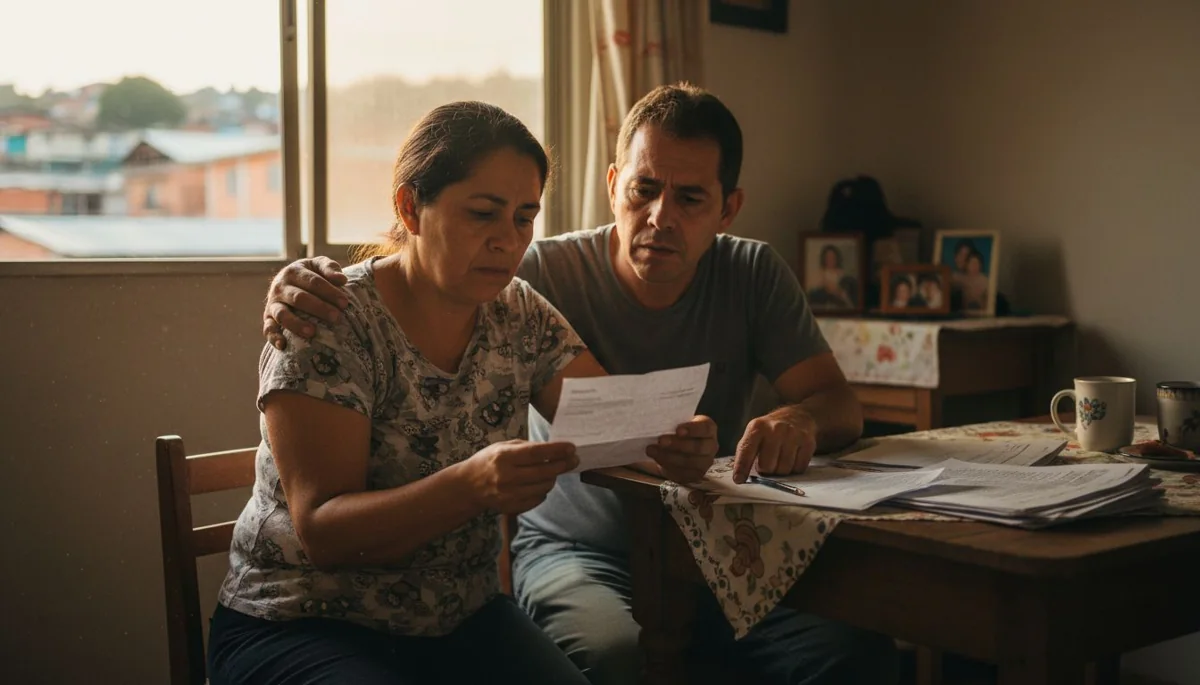
Edgar came to the office with the bank letter in his hand and a long face. He had saved for the down payment for three years, found the house, filled out every form… and they told him no. Without really explaining why. It happens to many families, and understanding Why are they rejecting a mortgage loan? Everything changes: rejection is almost always not a stroke of bad luck, but one of four or five specific reasons that can be seen coming and, to a large extent, corrected.
In short, the reasons why They reject a mortgage loan These issues are usually few and recurring: negative reports in credit bureaus, insufficient income to cover the monthly payment, job instability or incomplete documentation, and problems with the property or its appraisal. The good news is that almost all of them can be addressed before reapplying. In this guide, we explain them one by one, outlining what you can realistically do in each case.
Why do people get rejected for mortgage loans more often than you think?
The bank doesn't lend based on trust, it lends based on risk. When it reviews your application, it's answering a single question: will this family be able to pay this installment for the next fifteen or twenty years? If anything in your profile raises reasonable doubt, it prefers to say no. That's why understanding the logic behind the rejection gives you an advantage: it's not personal, it's a calculation, and calculations can be improved.
Before applying, you should know How mortgage loans work And how much can a lender lend you based on your income? Many people ask for more than they can afford, and that's why they're rejected, not because of a lack of honesty.
Is your credit history working against you?
This is the number one reason. Financial institutions check your payment history with credit bureaus, and a recent late payment—even on a cell phone or small credit card—raises red flags. You don't need a perfect score, but you do need to show that you pay your bills on time.
- Active or recent blackberries. A debt that is overdue today weighs much more than an old stumble that has already been paid for.
- Too many outstanding debts. Even if you pay them on time, if you already have several loans, the bank sees little room for a new one.
- Reports with errors. Sometimes a debt you've already paid appears on your statement. You can dispute this and it will be corrected.
Practical advice: Request your credit report, pay any outstanding balances, and allow a few months of good behavior before reapplying. A recent clean record is worth more than an old, spotless one.
Is your income enough to cover the fee you're asking for?
Most lenders apply a simple rule: the monthly loan payment should not exceed 301% of household income. If you request an amount with a payment that exceeds this limit, the system will almost automatically reject it, no matter how careful you are.
Before applying, do the math carefully. Check your borrowing capacity And if the monthly payment is too tight, there are two honest solutions: ask for a lower amount or add a co-signer who contributes income. Lowering your loan amount often turns a "no" into a "yes.".
Is the problem the property and not you?
Here's a surprising rejection: they approve your profile but deny the house. This happens when the property's appraised value is lower than the agreed-upon price, when the property has legal issues (unresolved inheritances, liens, incomplete paperwork), or when it doesn't meet the technical requirements of the lender.
That's why it's best to save up for the down payment with plenty of room to spare, not down to the last detail. If you want to understand how much you need to contribute upfront, check out our guide on the down payment to buy a home. And I always asked them to check the property documents before falling in love with a house.
What to do if you have already been denied a mortgage loan?
A "no" isn't the end. It's information. The first thing to do is ask for the reason for the rejection in writing; the institution is obligated to provide it, and that will tell you what to correct. Then:
- If it was through credit bureaus, get up to date and wait a few months.
- If it was due to income, lower the amount or get a co-signer.
- If it was because of the property, look for another property with all the paperwork in order.
- Try another institution: each bank has different policies, and what one rejects, another approves.
And don't forget that an approved loan opens the door to subsidies. If your household is low-income, check the housing subsidy from compensation fund, which can reduce the initial fee and improve your application.
Where can I verify my official information?
Before reapplying, get your affairs in order. As a financial consumer, you have the right to know and correct what the credit bureaus report about you; Financial Superintendency of Colombia It explains those rights and handles complaints against the entities. And if you're interested in the state savings plan to finance your home, check the current conditions at the National Savings Fund. Making decisions based on official data, rather than what an advertisement says, is the best way to avoid wasting time and money.
Why mortgage applications are rejected: causes and how to resolve them
Rejection is rarely for a single reason: the bank evaluates your credit history, your ability to pay, and the property as a whole. Understanding the factors that influence each case helps you make corrections before reapplying. This table summarizes the most frequent reasons for rejection and the general approach to overcoming them; the values are estimates, and each institution sets its own criteria.
| Frequent cause | What generates it? | How to turn it around |
|---|---|---|
| Low credit history | Late payments or reports in credit bureaus | Catch up and let several months of good behavior pass |
| Insufficient ability to pay | The projected payment exceeds the debt limit. | Reduce other debts or extend the loan term |
| Income difficult to prove | Informal work or work without formal support | Gather statements, tax returns, or certificates that support the income |
| Low down payment | Insufficient savings compared to the value of the property | Increase your savings or look for housing subsidies you qualify for. |
| Appraisal or legal status of the property | Lower valuation or problems with the registration folio | Verify the property documentation before applying |
Common causes of rejection and how to address them (general reference).
Common mistakes
- Not checking your credit report before applying: You arrive without knowing what the bank sees.
- Apply at multiple banks in the same month: Each query is recorded and can be interpreted as a sign of risk.
- Calculate the fee without including insurance or expenses: The actual budget is higher than you expected.
Before reapplying, verify your situation with official sources and, if possible, consult a financial advisor.
Frequently asked questions about mortgage loan rejection
How long should I wait before applying for another loan if I was denied?
It depends on the reason. If it was due to late payments, the reasonable thing to do is to catch up and wait three to six months of good payment history. If it was due to income or property issues, you can reapply as soon as you correct that, even with a different lender.
Can they reject my loan even if I have the full down payment?
Yes. The down payment is only part of it. If your income can't cover the monthly payment, if you have negative credit reports, or if the property has legal issues, the loan can be denied even if you have the full amount paid upfront.
Does being reported to credit bureaus close the door on me forever?
No. Negative reports only remain on your credit report for a limited time, and once you pay off the debt, your credit history starts to recover. What the bank looks at most is your recent payment history, so getting caught up on payments and maintaining that status opens up the possibility of a positive return.
Does getting a co-signer help if I was rejected due to income?
A lot. A co-signer with stable income and a good credit history adds repayment capacity to the application and reduces the risk perceived by the lender. It's one of the most effective solutions when the rejection was due to the loan amount or insufficient income.
How Hepacom accompanies you
At the Hechos Para la Comunidad Foundation, we've seen many families give up after a rejection, convinced that owning a home isn't for them. That's not true. Most "no's" can be corrected when someone calmly explains what happened and what to do. That's our mission: to ensure that access to decent housing doesn't depend on deciphering fine print.
We help you understand the reason for the rejection, organize your finances before reapplying, and identify which subsidies you could add to your loan. Find more guides on housing and your rights in our blog, Discover all our work in the Hepacom homepage And if you need guidance, write to us at donaciones@hepacom.org.
Information guide. The process is handled by the financial institution or official agency. Verify the current terms, rates, and requirements through official channels before making any decisions. Hepacom does not collect or process payments or loans.
Keep reading — more about Housing credit and financing
Crédito con garantía hipotecaria: cómo funciona y qué revisar para no perder tu casa
Guía del crédito con garantía hipotecaria: cómo funciona, diferencia entre bancos y prestamistas, tasa de usura vigente y qué r…
Read more →Scheduled savings for housing: how it works and why they require it for the subsidy
What is a housing savings plan, why does it count towards the subsidy, how much should you save, which institutions offer it, and what else…
Read more →Housing leasing: what it is, how it works and who can apply for it
Residential leasing: what it is according to the Financial Superintendency, how the monthly payment is calculated, who can apply…
Read more →Bancolombia mortgage loan: requirements, terms and how to apply
Bancolombia mortgage loan: how much it finances (80% VIS / 70% No VIS), terms in pesos and UVR, minimum income from 1 SMMLV and …
Read more →Your donation builds the next home
If this story touched you, turn it into a roof for a Colombian family.
Donate now ♥