
Decent housing in Colombia: a guide to obtaining and supporting it
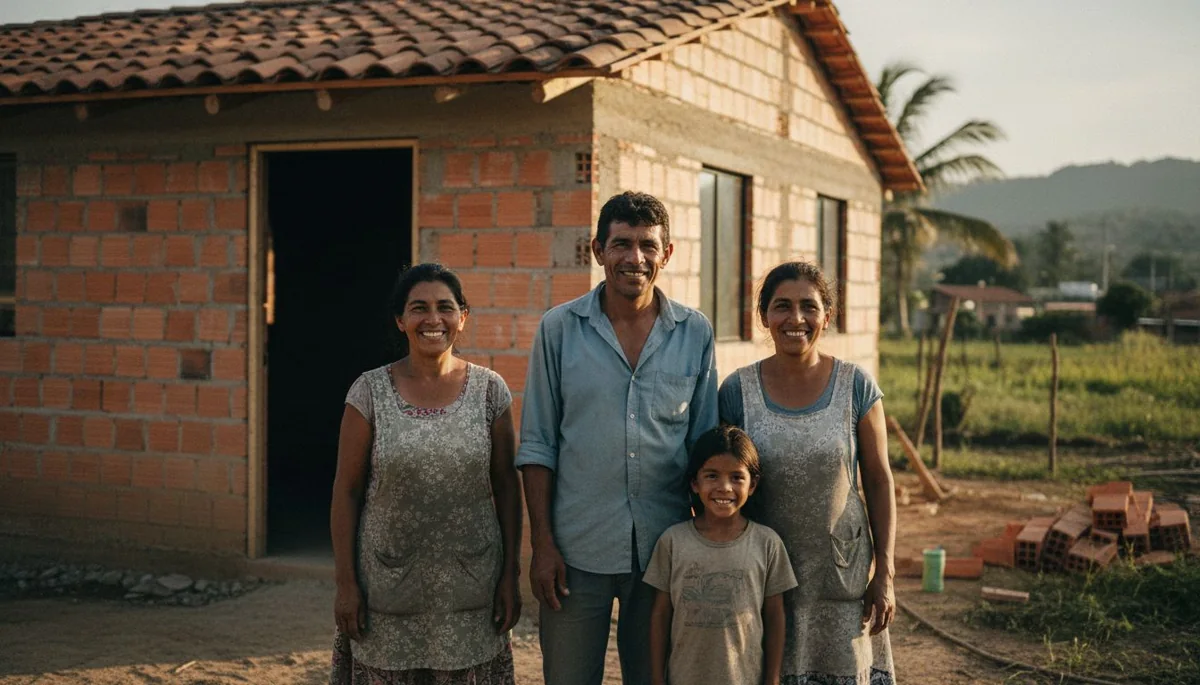
The decent housing in Colombia This is the reason for our foundation's existence, and also one of the country's greatest social debts: millions of households live in homes with dirt floors, without basic services, or in precarious situations. This is our guiding principle: in one place, we bring together what constitutes decent housing, how a family can access their own with the support available, and how you can help another family achieve this.
Think of it as a map with three paths: Understanding the problem, accessing housing (subsidies and credit), and helping to build housing for those who cannot. Each point below links to a detailed and verified guide.
Last updated: June 2026.
What is decent housing and why do so many families not have it?
Decent housing is not just about having a roof over your head: it's about a safe home, with basic services, without overcrowding, where a family can grow up healthy. In Colombia, the housing deficit is enormous, and understanding the problem is the first step to solving it.
- What is decent housing and why do so many families in Colombia lack it?
- Housing deficit in Colombia: the figures that explain the problem
- House with dirt floor: the health risk that many don't see
- The importance of decent housing (goes far beyond just a roof over your head)
How can a family access their own home?
The path to homeownership almost always combines a government subsidy or a housing fund with a loan. Here are the guidelines to understand each component:
- Housing subsidies in Colombia 2026What is still in effect and what to do if you don't qualify.
- What is social housing (VIS)? and who it's for.
- Home improvementHow to fix your house with state support (the solution to the qualitative deficit).
- How mortgage loans work in Colombia.
And since many subsidies depend on your social classification, you should check our Complete guide to state aid and subsidies, where we explain Sisbén, Mi Casa Ya and the rental subsidy step by step.
How can you help a family have decent housing?
This is where the community comes in. Building housing for those who can't afford it is a collective effort, and there are options for all budgets and timeframes.
- 7 ways to help a homeless family in Colombia
- Monthly donationWhy a small, recurring contribution changes everything.
- How to sponsor a family and accompany their case from beginning to end.
- Construction volunteeringHow to start helping with your hands.
- Donate building materials y donate furniture and appliances.
- How to help at Christmas to a family without decent housing.
What if I am a company? (donations and CSR)
Businesses can transform lives and, in the process, reap real tax benefits. If you represent a company, take a look:
- Corporate donations: the tax benefit (25% discount on rent).
- Corporate social responsibility and housingHow to add your company.
- How to donate to a foundation and deduct it from your taxes + the donation certificate.
- How to choose a trustworthy foundation to donate to y What is a non-profit organization?.
What makes a home truly decent?
It's not just about having four walls and a roof. International organizations and Colombian regulations agree that decent housing must meet several conditions simultaneously: security of tenure (so that no one can evict you overnight), adequate materials and structure (no temporary walls or leaky roofs), access to basic services (drinking water, electricity, sanitation), enough space so the family doesn't live in overcrowded conditions, and a location with access to work, healthcare, and education. When any of these elements is missing, we speak of a housing deficit, a problem that... DANE It measures periodically.
In Colombia, this deficit is significant and, above all, qualitative: many families do have homes, but with dirt floors, no sewage system, or in overcrowded conditions. Therefore, a large part of the solution is not to build from scratch, but to improve what already exists. We explain this with official figures in our guide to the housing deficit in Colombia.
How is the purchase of a home actually put together?
For a low-income family, owning a home is almost never paid for with a single source. It's built piece by piece, and understanding how those pieces fit together is what makes the difference between achieving it or not.
- The subsidy reduces the initial fee (from the State, the compensation fund, or both combined).
- Severance pay The money you have accumulated can be used for housing and counts as savings.
- Scheduled savings The amount you contribute demonstrates ability to pay and is sometimes a requirement.
- Mortgage loan or housing lease finance the rest over several years.
When these elements are combined effectively, a family that thought buying a home was impossible can end up with a monthly payment similar to their previous rent. The key is to start by knowing which Sisbén group you fall into and which subsidies you qualify for. Ministry of Housing, before committing to a property.
How Hepacom accompanies you
We are the Hechos Para la Comunidad Foundation, a Colombian non-profit organization working to help low-income families access decent housing. We do two things: we support families in understanding and managing the assistance programs they are entitled to, and we build and improve homes with the support of donors, volunteers, and businesses. Decent housing is not a luxury: it is the foundation upon which a family builds health, education, and a future.
If your family is looking for guidance, or if you want to be part of the solution, write to us at our contact page or to the email donations@hepacom.org, find out how support the foundation and read more guides in the blog.
Information guide. Subsidy applications are processed by the official agency; always verify through official channels. Hepacom does not charge for registration or manage government payments.
Routes to access decent housing in Colombia
Accessing decent housing isn't about a single procedure, but about combining the right tools for your situation. Knowing what's available helps you plan your own path. This table summarizes the most common options and who they typically serve.
| Via | What does it consist of? | Who it usually serves |
|---|---|---|
| Housing subsidy | Contribution from the State or the compensation fund to buy or build. | Low and middle income households that qualify. |
| Mortgage loan or leasing | Financing to complete the value of the home. | Someone who has a stable income and the ability to pay. |
| Social Interest Housing (VIS) | Projects with price caps designed to facilitate access. | Households seeking an affordable first home. |
| Home improvement | Support to improve a home you already own. | Households with their own homes in conditions that need improvement. |
Common mistakes when looking for decent housing
- Thinking that there is only one way: Often, subsidies, savings, and credit are combined. Look at all the options before ruling anything out.
- Not checking your Sisbén classification: It's the first step in securing much of the support. Confirm your group before applying.
- Falling for offers that promise easy housing: Be wary of anyone who asks for payments to guarantee a subsidy. Official procedures don't work that way.
Frequently asked questions about decent housing in Colombia
What is considered decent housing in Colombia?
A safe home, with access to public services, without overcrowding and with adequate materials (not dirt floors or temporary walls). It is a recognized right and the foundation of a family's well-being.
How do I get a housing subsidy?
It depends on your Sisbén classification and the program (Mi Casa Ya, compensation funds, home improvement). Our guide to government aid and subsidies explains each process step by step.
How can I help a family obtain decent housing?
You can help by making a donation (one-time or monthly), sponsoring a family, volunteering, or donating supplies. Businesses can also donate and receive tax benefits.
Are donations to the foundation tax-deductible?
Yes. Donations to a non-profit organization under the Special Tax Regime entitle you to a tax deduction on your income tax, with your donation certificate. Verify the conditions with your accountant and the DIAN (Colombian Tax Authority).
Should I buy or improve the home I already own?
It depends on your situation. If you already have a house but it's in poor condition (dirt floor, no proper bathroom, overcrowding), home improvement is usually faster and cheaper than buying. If you don't own a home, the best option is a combination of subsidy and loan. Both options offer government support.
Keep reading — more about Decent housing
Subsidios de vivienda para víctimas del conflicto armado: rutas y cómo pedir la prioridad
Qué dice la Ley 1448 de 2011 sobre la prioridad de las víctimas en los subsidios de vivienda, qué rutas existen (compra, sitio …
Read more →Subsidized housing: where to find real VIS and VIP projects
Where to find subsidized housing through official channels, what the limits are for VIS and VIP housing according to Law 2294 of 2023 and…
Read more →Solidarity rental subsidy: open registration and who can apply
There's an open call: Bogotá is accepting in-person applications from September 7th to 23rd, 2026. Who qualifies for each program…
Read more →Young Owners: what happened to the program and what exists today
Thousands of young people are looking for a program that was announced in 2021 but is no longer accepting applications. We'll tell you what's happening, how to get started…
Read more →Your donation builds the next home
If this story touched you, turn it into a roof for a Colombian family.
Donate now ♥