
RUI inquiry: how to do it with your ID card and what happens to your subsidies
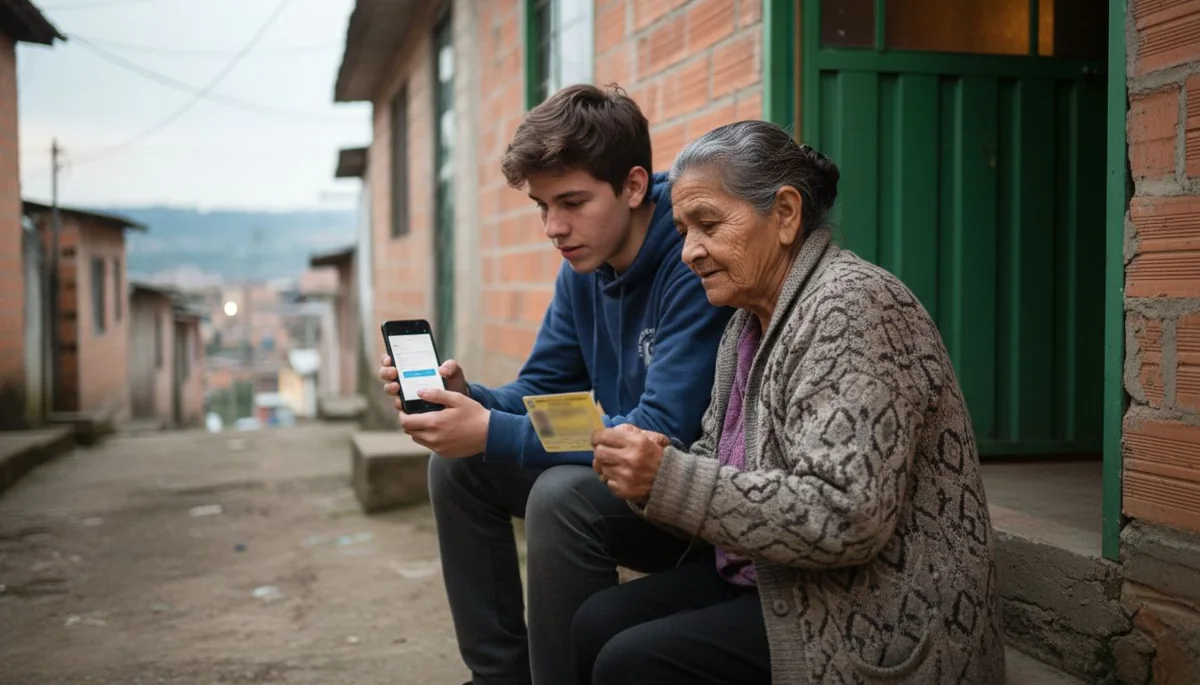
Since August, in many homes someone has been asking the son or grandson who uses the cell phone: "What's this RUI thing about now? Are they going to take away my subsidy?" The calm answer is that there's no need to panic. RUI query It's free, done with your ID number, at the Social Window of the National Planning Department (DNP), and it shows which group your household has been classified into. Here we explain what the Universal Income Registry is, how to check it step by step, what happens to your benefits after October 31, and what to do if the classification doesn't reflect your actual situation.
What is the RUI consultation and since when has it existed?
The short answer: the Universal Income Registry (RUI) is the new government tool for deciding who receives subsidies and social programs, and the consultation is how you check your classification within it. It is administered by the National Planning Department (DNP). It was established by Article 70 of Law 2294 of 2023 (the National Development Plan), regulated by Decree 875 of 2024, and its implementation date was set by Decree 662 of June 26, 2026. August 1, 2026.
The difference from what we were familiar with lies in what is being measured. The Sisbén IV primarily classified people based on the living conditions recorded in the survey. The RUI seeks to estimate the income of individuals and households, and for that purpose it crosses three sources, according to the DNP: the income observed in administrative records (health contributions, taxes), an income estimated with a statistical model based on socioeconomic variables and, when there is not enough data, what the household declares in the Sisbén survey at the office of its municipality.
This means that the Sisbén system did not disappear. The DNP stated this when announcing the change: "The Sisbén system does not disappear, it evolves." The survey remains the gateway to [the system/program/etc.]. Social Registry of Households, which is the basis on which the RUI is built.
How do I check my RUI (Single Taxpayer Registry) using my ID card?
It's done online, from your cell phone or computer. These are the steps:
- Enter the DNP Social Window. Check that the address ends exactly in dnp.gov.co.
- Scroll down to the section «"RUI Inquiry"» (It also appears in the menu above).
- Choose the document type. The list includes national identity card, identity card, birth certificate, foreign resident card, Temporary Protection Permit, and other migrant documents.
- Write the number without periods or spaces and click on "consult".
- Write down or take a screenshot of the result. If something doesn't add up, that screenshot will be useful when you go to the Sisbén office.
A detail that several families have asked us about: in the first days of August, the platform became slow. The DNP published a notice on August 2nd explaining that the delay was due to the number of simultaneous visits, and recommended accessing the site early in the morning or at night and avoiding refreshing the page repeatedly. If it doesn't load for you, it doesn't mean your household has been removed from the system.
Do you also want to see your Sisbén classification? We'll explain. How to check your Sisbén score using your ID card.
What happens to your subsidies after October 31st?
This is the date that causes the most concern, so let's look at what the source says. According to the DNP, households already identified in the Sisbén system before July 31, 2026, will undergo a transition process that, in any case, until October 31, 2026. During those months, the entities adjust their programs to the new registry, and the municipalities must gradually inform households about the next steps.
The same DNP announcement clarifies that No immediate action is required on behalf of the families. And the Mayor's Office of Medellín, in its note on the implementation, includes a phrase worth remembering: the classification in the RUI does not automatically assign or withdraw subsidies, because each entity continues to define the access requirements to its programs.
In practice, this means that your Citizen's Income, your Colombia Mayor benefit, or your subsidized health insurance depend on the decisions made by each program according to its own rules. Prosperidad Social, for example, paid the fourth cycle of Citizen's Income using the Sisbén IV database, during the transition period. We explain this in detail in the Citizen's Income requirements and we follow the dates in the subsidy payment schedule. Exactly what will happen on November 1st with each program has not yet been published; when it is, we will update it here.
How does the RUI differ from the Sisbén IV?
The classification looks familiar because it retains the four groups you already know, with the same letters. What changes is where the information comes from and who is registered.
| That | Sisbén IV | RUI |
|---|---|---|
| What does it measure? | Living conditions recorded in the survey | Estimated income of the person and the household |
| Where does the data come from? | Primarily the household survey | Administrative records, a statistical model, and surveys when data is missing |
| Who does it cover? | Who requested the survey? | To the population with a valid document |
| Groups | A (A1-A5), B (B1-B7), C (C1-C18), D (D1-D21) | The same four groups, from extreme poverty (A) to neither poor nor vulnerable (D) |
| Where to consult | Sisbén page with ID number | DNP Social Window, "RUI Inquiry" option« |
| Who corrects data | Sisbén office of the municipality | The same Sisbén office, through the Social Window |
Source: Social Window of the DNP, DNP press release of July 10, 2026 and note from the Mayor's Office of Medellín on the implementation of the RUI.
If you want to understand what each letter opens, check out our guide to Sisbén groups for subsidies. The cuts requested by each program remain the decision of each entity.
What to do if your RUI classification is not accurate?
It happens more often than you might think. The system works with records, and those records are sometimes outdated: a formal job that has ended, a person who no longer lives at home, a household that has broken up. The Social Services Office recognizes the right to update and correct information, and the process is in person: go to the office in charge of administering the Sisbén in your municipality To request a new survey or update your information, you can visit the same window where there is a directory of Sisbén offices by department.
Bring the ID of all household members and any documentation that shows the change, such as a contract termination letter or a family member's death certificate. You can find the step-by-step survey instructions in our guide. update the Sisbén survey. That procedure is free at the public office.
How to avoid fake RUI pages?
When a new procedure becomes popular, websites appear that impersonate the government to ask for your information or money. In recent weeks, websites like "sdp.sisben-gov.co", "rui-consultar.online", and "ventanillasocial.com" have ranked highly on Google. They are not from the DNP. The only official address for inquiries is ventanillasocial.dnp.gov.co. A Colombian government domain ends in .gov.co, without any weird hyphens before.
There's no such thing as "registering with the RUI" by paying, nor are there any agents who can upgrade your tax bracket. If someone offers you that, it's a scam. We've listed the most common warning signs below. How to identify scams involving government subsidies.
Common errors when querying the RUI
- Thinking that a different group in the RUI automatically removes you from a program is a mistake. Each entity defines its own requirements, and the transition period runs until October 31st.
- Check on a website that does not end in dnp.gov.co and leave your document number or your cell phone number there.
- You're stuck with the wrong classification without going to the Sisbén office. If your situation has changed, you can request a correction there, and it's free.
Frequently asked questions about the RUI consultation
Is there a cost for consulting the RUI (Single Registry of Users)?
No. The consultation at the DNP's Social Window is a public service open to all citizens. No one should charge you for it.
Do I need to do anything before October 31st?
According to the DNP, no immediate action is required. However, it is advisable to check your classification and, if it is incorrect, request an update at the Sisbén office.
Can I check the RUI of my minor children?
The service accepts civil registry and identity card documents, so yes, you can consult with those documents.
Does the RUI replace the Sisbén?
The RUI becomes the targeting instrument, but the Sisbén continues to exist as a survey and as a source of data for the Social Registry of Households.
How does Hepacom support you?
At the Hechos Para la Comunidad Foundation we work for the decent housing in Colombia, And we know that for many families, government assistance is what allows them to pay rent or finish building a room. That's why it's important to us that no household loses a right because they don't understand a change in the system. Your household has the right to be properly classified, and checking your RUI (Single Identification Number) is the first step to verifying this.
If you have any questions, write to us at donaciones@hepacom.org or visit our website contact. Hepacom does not enroll anyone in state programs, does not charge for guidance, and does not handle payments.
Check it at the source: the DNP Social Window, he DNP statement on the transition to the RUI and the Decree 875 of 2024 on Public Service.
Last updated: September 2026. Information guide. The procedure is handled by the official entity. Verify through the official channel before taking any action. Hepacom does not collect or process payments.
Keep reading — more about Sisbén, records and health
Cómo actualizar la encuesta del Sisbén paso a paso
Aprendé a actualizar la encuesta del Sisbén paso a paso: cuándo hacerlo, qué documentos llevar y por qué el trámite es gratis y…
Read more →Certificado de discapacidad: cómo sacarlo paso a paso, cuánto cuesta y para qué sirve
Guía del certificado de discapacidad: quién lo expide, paso a paso para pedir la orden y la valoración, plazos, costo, para qué…
Read more →Sisbén family group: who is on your record and how to change it
Family ties don't determine who's on your list: they determine the shared budget and the communal pot. Who counts as a resident…
Read more →Difference between contributory and subsidized schemes: which one applies to you and what happens if you change jobs
Both systems offer the same benefits plan; what changes is who pays, what they charge for consultations, and whether they pay disability benefits.
Read more →Your donation builds the next home
If this story touched you, turn it into a roof for a Colombian family.
Donate now ♥